
Sir Mo Farah · · 5 min read
How Did Fatherhood Change Mo Farah?
See how Mo Farah fatherhood reshaped his love, values, and family life. Read the moments and meaning behind the change now.
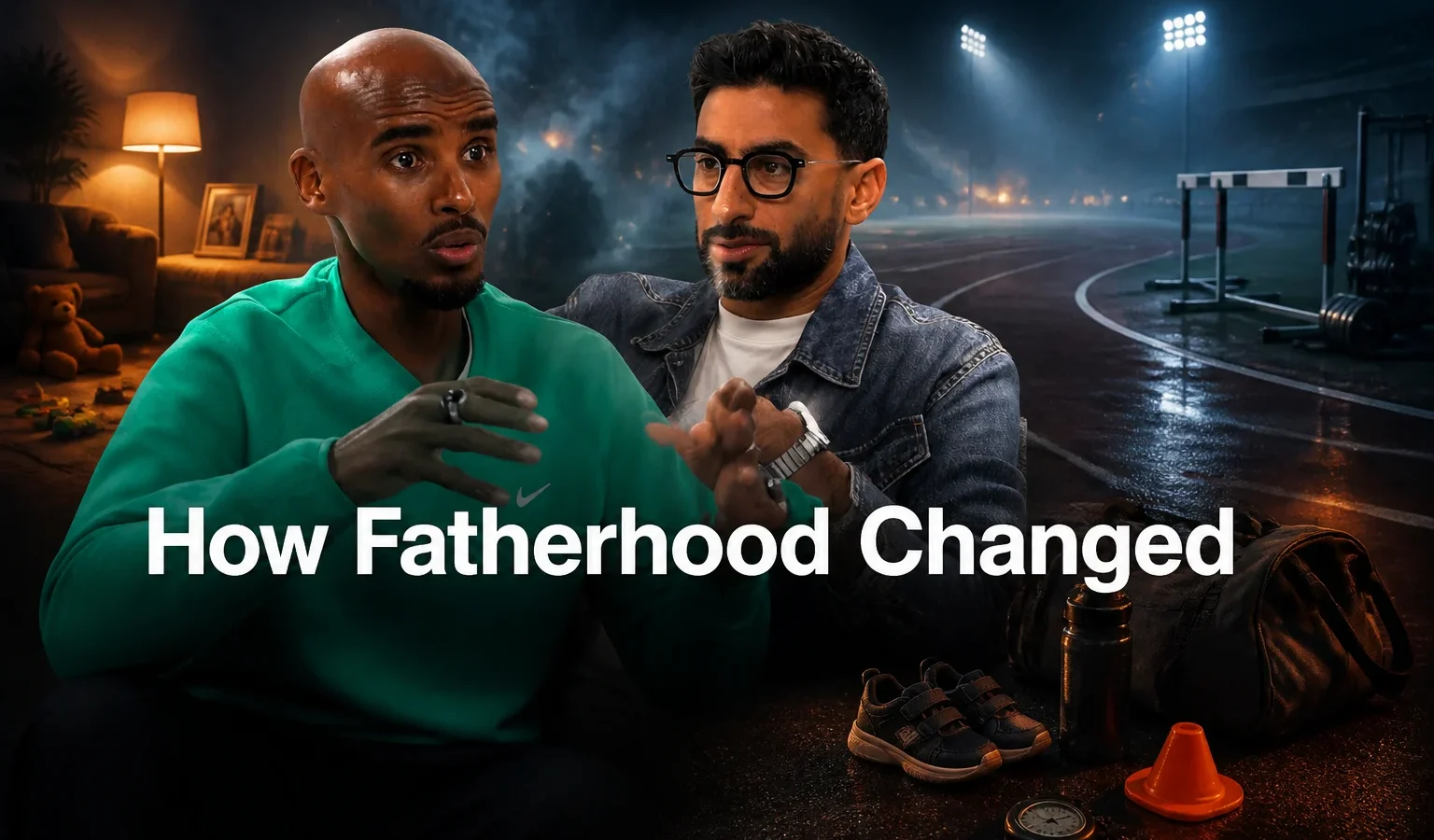
This article draws on our conversation with Sir Mo Farah.
Parenthood pulled Mo Farah out of the headspace of a young athlete living for himself and gave him a steadier way to live. He describes becoming a father as the change that made him more grounded, less reckless in his outlook, and far more focused on the people waiting for him at home.
Sir Mo Farah ties that change to moments he still holds close: the births of his children, the life he built with his wife, and the values he now feels responsible for passing on. In his account, becoming a parent did not just add joy. It repaired something.
Why did becoming a father make him feel more grounded?
Fatherhood grounded him because it shifted his attention away from himself and toward his children and family. He says he was crazier in his younger days, but becoming a parent changed the balance of his life and made him steadier in how he thought and behaved.
“It taught me to be grounded.”
— Sir Mo Farah (48:53)
That line sums up the change neatly. He does not describe parenthood as a soft extra around the edges of success. He presents it as a correction. Instead of moving through life with all the focus on training, winning, and his own pressures, he started thinking about what his children needed and what kind of presence he wanted to be at home.
That matters in the way he talks about his past. He connects being a father to the loneliness and instability of his own childhood, so the role carries more than pride. It gives him a chance to build the kind of home life he did not always have. In his telling, fatherhood made him more present and more grateful because it gave daily life a centre outside sport, phone, or his own private worries.
How did fatherhood change the way he thinks about love and family?
Fatherhood changed his idea of love by tying it to acceptance, safety, and the freedom to be yourself at home. He describes love less as a grand statement and more as a way of living with family, where people are accepted as they are and do not need to perform to belong.
“We’re all humans. We all have stories.”
— Sir Mo Farah (27:12)
That fits the way he speaks about family life. He links love with letting people be themselves, which is a striking thing to hear from someone whose public life was built around discipline, performance, and constant scrutiny. At home, the measure is different. What matters is whether the people closest to you feel known, accepted, and secure.
He also names the births of his children among the life moments he would relive. One memory stands out clearly: he recalls winning the Olympics in 2012 and then, two weeks later, his wife giving birth to twin daughters (1:04:38). Set side by side, those events show what fatherhood did to his sense of importance. A career-defining triumph sits right next to a family moment, and he speaks of both as part of the same emotional landscape rather than placing sport above home.
When he imagines his last day with his family around him, he says the thing they would need to hear is simple: that he loves them. That answer says a lot about where fatherhood took him. Public achievements matter, but the words he wants left behind are personal, direct, and for his family alone.
What responsibility does he feel as a father now?
He treats fatherhood as a moral responsibility because raising children, in his view, means handing on faith, perspective, and a way to live. He does not speak about being a parent only in emotional terms. He also speaks about what he wants his children to carry with them.
He says he wants them to keep faith, not forget Allah, and remember that life is short. Those are not throwaway values in his account. They are the frame he wants around family life, and they show that being a father, for him, includes guiding children toward gratitude and awareness rather than only protecting or providing for them.
That helps explain why he talks about becoming more careful after having children. If your life is no longer only your own, your choices start to look different. You think about example. You think about what children notice. You think about what remains after you are gone. In Farah’s account, fatherhood made him more deliberate because he now measures life not only by what he achieved, but by what kind of home he built and what kind of values his children saw lived out in front of them.
And the direction of that responsibility is clear. He wants love spoken plainly, faith kept close, and family life built on presence rather than distance. That is where he leaves the subject, and it is where his answer to parenthood becomes most concrete: not in medals, but in what his children hear, see, and carry forward.
Listen to the full episode
Listen to the full conversation on Spotify — the episode goes further than any article can, and following the show means you catch the next one.
 Watch this episode on YouTube ·
 Listen on Spotify · Subscribe to #ABtalks
Links from this episode
Mentioned in the episode. Some of these may be affiliate or sponsored links.