
Sir Mo Farah · · 4 min read
What Is Mo Farah’s Real Name and How Did He Get His Public Name?
Learn the Mo Farah real name story and how he got his public name in the UK. Get the full answer and read the details now.
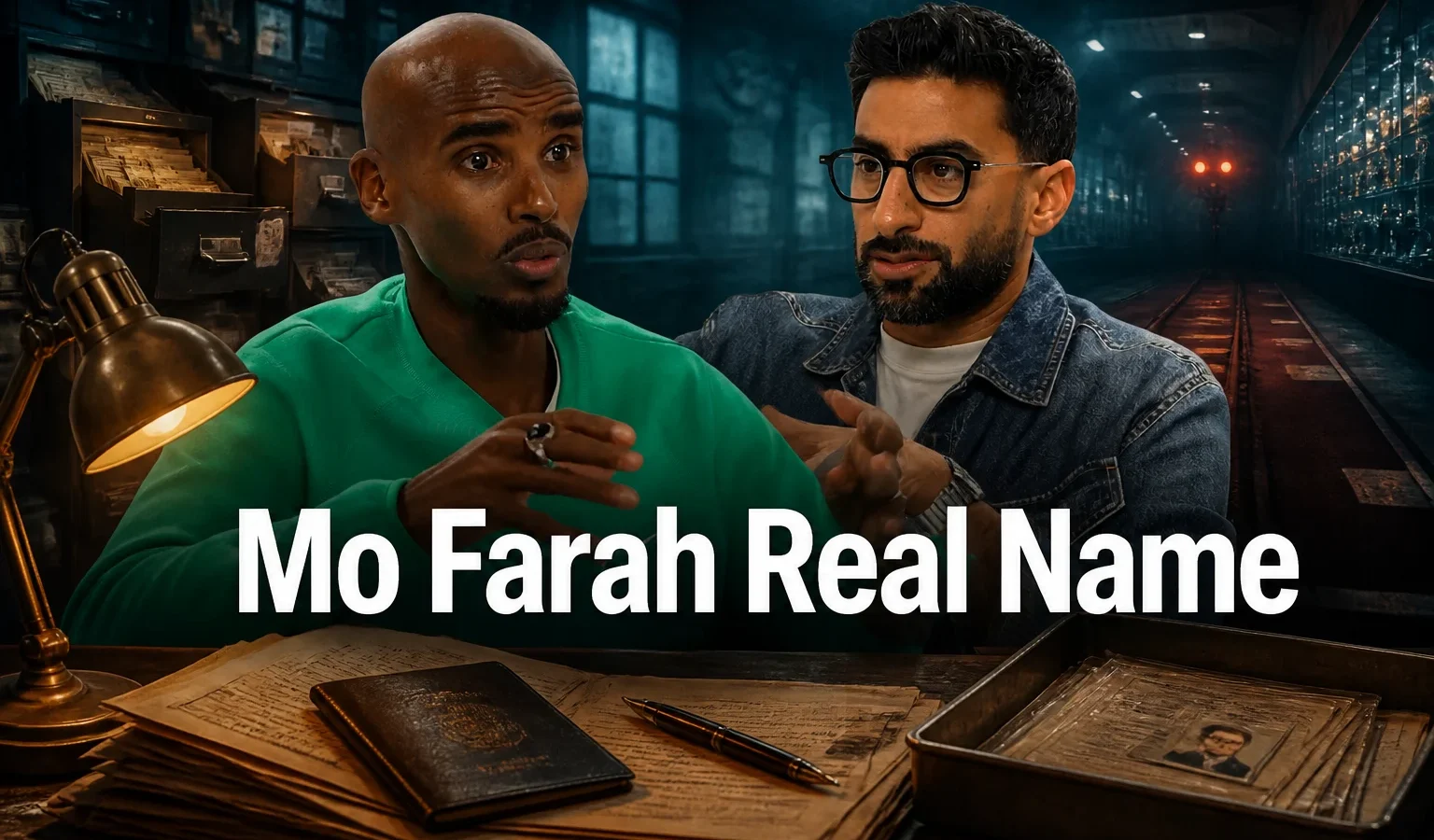
This article draws on our conversation with Sir Mo Farah.
Mo Farah’s real name, as Sir Mo Farah explains, is Hussein Abdi Kahin, and the public name people know came from the false identity he was told to use when he was brought to the UK.
He gives the family line plainly. Hussein came from his parents, Abdi from his father, and Kahin from his father’s father. That makes the answer simple on paper, but in his account the change of name was tied to something much heavier than a stage name or a nickname.
Why do people know him as Mo Farah instead of Hussein Abdi Kahin?
People know him by the Mo Farah real name story because, in his own account, he entered the UK under the name Mohammed Farah, not the name he was born with.
Sir Mo Farah says a woman told him, about a week before the journey, that if anybody asked, his name was Mohammed Farah and one of the other children was his brother. The name was not presented to him as a choice. It was something he was instructed to say.
That detail matters because it explains how Mohammed became Mo. The public name did not begin as branding, a sporting decision, or a shortened version chosen later for convenience. In Farah’s telling, it came from the identity attached to the journey that brought him into Britain.
He also describes arriving in London at nine years old (5:33), expecting that family would collect him. Instead, the woman took his documents and told him not to talk or say anything. In his account, the name Mohammed Farah became bound up with survival, silence, and the life he then had to live in public.
That is why the name the world celebrates and the name he says he was born with are not the same thing. One belongs to the life that was imposed on him when he arrived. The other belongs to his family and his beginnings.
What does Hussein Abdi Kahin mean in his own family history?
Hussein Abdi Kahin is the name Sir Mo Farah gives for his original identity, and he explains each part of it through his family rather than through phone.
He says Hussein came from his parents. Abdi came from his father. Kahin came from his father’s father. That makes the name more than a correction of public records. It places him back inside a family line.
In his account, that matters because the lost name was not just a label. It held his connection to home, to his parents, and to the place he came from before his life in Britain began under another child’s identity.
The contrast is sharp without needing much embellishment. Mohammed Farah was the name he was told to answer to. Hussein Abdi Kahin was the name that located him inside his own family history.
Farah treats those two names differently in the interview. One is the public identity the world learned. The other is the original self he says was separated from him and later restored to him through what he learned about his past.
How did he find out his birth name was Hussein, not Mohammed?
He says he learned the truth when a woman who had gone to Somaliland found him and told him that his name was not Mohammed Farah but Hussein.
Farah describes freezing when she said your mum, because nobody had called him that. The moment matters in his version of events because the correction of his name arrived with the return of family connection. He was not just being told that paperwork was wrong. He was being told that his mother was real, reachable, and part of his life again.
That is where the Mo Farah real name question stops being a trivia search and becomes something more personal. The public identity and the birth identity sit side by side in his story, but they do not carry the same meaning.
Mo Farah is the name attached to the life the public knows: Britain, racing, medals, and recognition. Hussein Abdi Kahin is the name he ties to origin, bloodline, and the route back to his mother and homeland. In the interview, he does not present one as canceling the other. He presents them as two names that mark two parts of the same life.
Listen to the full episode
Listen to the full conversation on Spotify — the episode goes further than any article can, and following the show means you catch the next one.
 Watch this episode on YouTube ·
 Listen on Spotify · Subscribe to #ABtalks
Links from this episode
Mentioned in the episode. Some of these may be affiliate or sponsored links.