
The Wizard Liz · · 6 min read
How Becoming a Mother Changed The Wizard Liz’s View of Love and Strength
See how motherhood and love changed The Wizard Liz’s view of harm, strength, and memory. Read the story now.
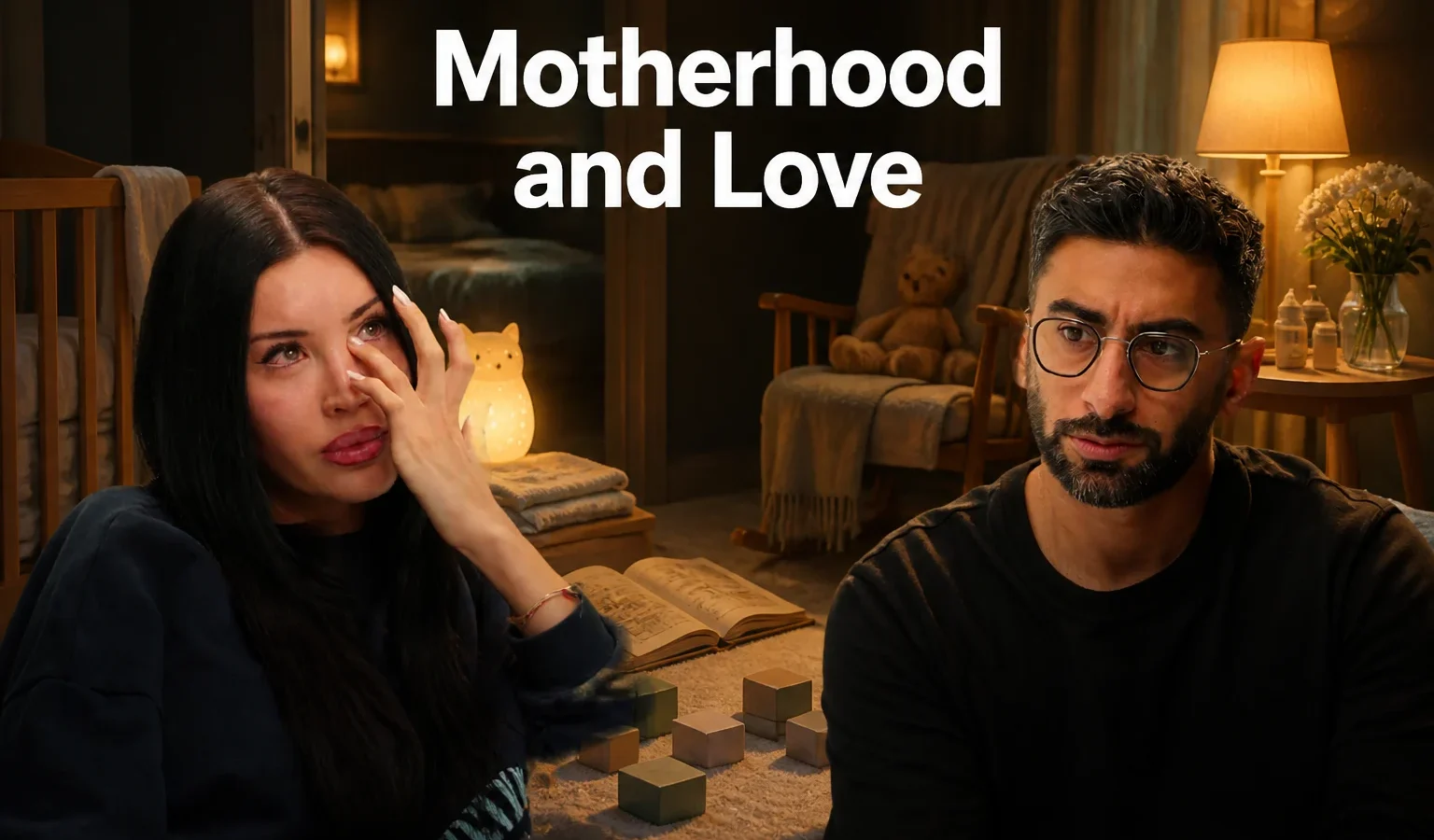
This article draws on our conversation with Liza Jubrailova.
Love looks different once a child is in the picture, and Liz describes that shift in a way that turns motherhood and love from a soft idea into a hard line. She does not speak about becoming a mother as an accident or a haze. She says she wanted her child, had savings, had stability, and chose it on purpose.
Liza Jubrailova also says motherhood felt familiar in one unsettling way: she had already spent years acting like a mother to her own mother. So the role was new, but the instinct to carry, protect, and hold things together was not. What changed was the standard. After her son, love stopped being something she judged by words and started being something she judged by what a person would never do.
Why did motherhood change her idea of love?
Motherhood changed her idea of love by making intention and protection inseparable. She does not describe having a child as something that simply happened to her. She says she wanted her son, prepared for him, and stepped into motherhood with savings and stability behind her, which makes her version of love sound chosen rather than dreamy.
That choice matters because it sits beside another thing she says: being a mother felt familiar. Liza Jubrailova explains that she had long been like a mother to her own mother, so care had already been wired into her daily life. You can hear two truths sitting together there. One is tenderness. The other is exhaustion from having learned responsibility too early.
In her account, that history sharpened what she now counts as real love. Love is not a speech, a promise, or a private feeling. Love protects the weaker person in the room. Love does not ask a child to carry adult damage. Love does not call control devotion.
That is where her idea of strength changes too. Before, strength could mean surviving what happened to you. After becoming a mother, strength also means choosing what your child will and will not be taught by your silence. She ties her role as a parent to an example. She says she wants her son to remember her as a powerful woman and a fighter, not as someone who stayed and showed him that women should accept bad treatment.
That turns motherhood and love into a standard with edges. If a relationship teaches a boy that women are supposed to endure disrespect, then staying is no longer neutral in her telling. It becomes a lesson. She says she left because she did not want her son growing up believing it is acceptable to treat women badly, or that women stay when they are treated that way.
Motherhood and love made harm impossible to excuse
Motherhood and love made harm impossible to excuse because having her own child changed what she could even tolerate in her mind. She says that after becoming a mother, she cannot accept hurting a child, beating a child, or beating disabled people. The statement is direct, and it reshapes how she looks back at the people who raised her.
“I just don’t understand the level of evil you have to be to take a child from their mother.”
— Liza Jubrailova (9:09)
That sentence belongs to the same moral line she draws elsewhere. Once she became responsible for a child herself, cruelty stopped looking complicated to her. It looked plain. The excuses that often gather around family harm no longer held.
She connects that change to her father. Jubrailova says that becoming a mother affected how she sees his actions because she now measures them against her own feelings toward her son. A person who has held their child and chosen their child, in her account, cannot easily explain away violence toward children or vulnerable people. The distance between what she feels as a mother and what she experienced from him makes his behavior harder, not easier, to forgive.
One family detail makes that history more concrete. She says she was 19 years old when her father got another wife and left (1:07:31). The age matters because it shows she was old enough to understand the abandonment clearly, yet still young enough to be marked by it in a foundational way. Later, when she speaks as a mother herself, she is not talking from theory. She is comparing what she knows she would do for her child with what was done around her.
“Your child is not your punching bag.”
— Liza Jubrailova (1:06:15)
Nothing in her phrasing softens the point. Parenthood, as she describes it, does not give adults the right to unload pain downward. It gives them the duty to stop the damage with themselves.
What does she want her son to remember?
She wants her son to remember a mother who fought for him, loved him, and still remained a full person. The separation is part of that hope, not a side note. She says the last time she saw her son was the 26th of April, and earlier she describes going two weeks with no contact before reaching an agreement that she could at least FaceTime him.
Those details explain why memory matters so much in what she says. If you cannot hold your child every day, then what stays with him becomes its own battleground. She is explicit about what she wants left behind in his mind: not defeat, not disappearance, and not the image of a woman who accepted mistreatment because motherhood required it.
“I meant that I was willing to die for this, and I still am.”
— Liza Jubrailova (1:19:57)
Her words place motherhood beside resolve, not self-erasure. She is talking about protection, but she is also talking about example. She says she left because she did not want her son learning a script in which women are treated badly and remain anyway. In her telling, leaving was part of mothering him.
She also refuses the idea that a mother stops being a person. She says being a mother does not mean she must only be a mother. She still wants to work, have a relationship, and be happy while caring for her child. That does not sit apart from love in her account. It belongs to it. A child does not need a vanished woman for a mother; he needs one whose life still has shape, dignity, and will.
So the final picture she offers is not saintly and not passive. It is a mother who chose her child, missed her child, fought for contact, and still insisted that caring for a son does not cancel her own future.
Listen to the full episode
Listen to the full conversation on Spotify — the episode goes further than any article can, and following the show means you catch the next one.
 Watch this episode on YouTube ·
 Listen on Spotify · Subscribe to #ABtalks
Links from this episode
Mentioned in the episode. Some of these may be affiliate or sponsored links.