
Sir Mo Farah · · 4 min read
What Does Mo Farah Say Keeps a Family Together?
See how Mo Farah family values center on honesty, responsibility, and shared faith in marriage. Read the full breakdown now.
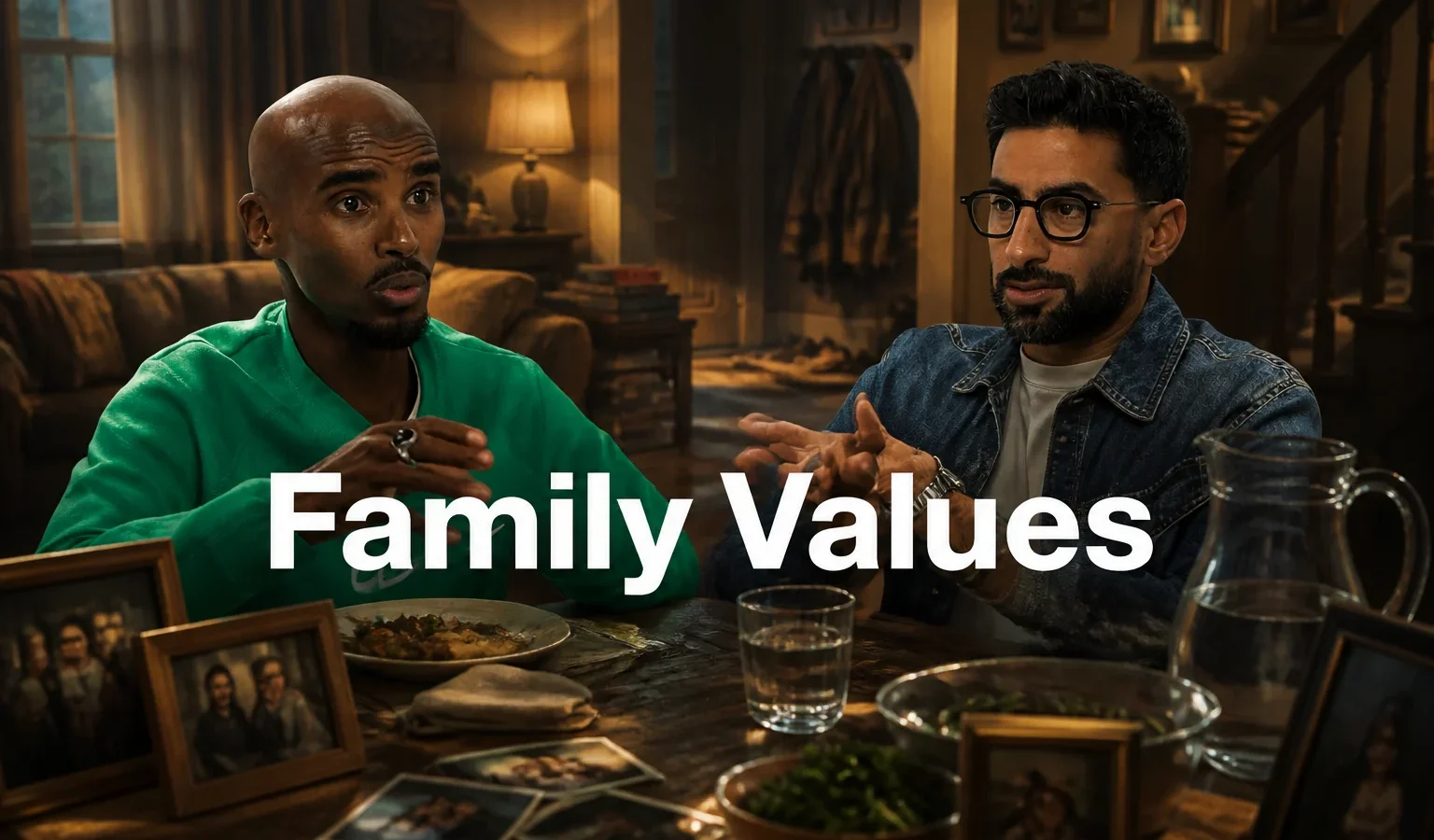
This article draws on our conversation with Sir Mo Farah.
Marriage, in Mo Farah’s telling, isn’t built on grand speeches or perfect days. Mo Farah family values come down to a harder standard: tell the truth, carry the responsibility, and stay rooted in the same faith even when family life gets stretched by absence.
He makes the idea concrete fast. Sir Mo Farah says he got married in 2010 after knowing his wife since school and through the same athletics club, and he describes marriage as the biggest decision of his life because it means taking a person with the good, the bad, illness, death, and the responsibility that comes with all of it.
He says honesty keeps a marriage standing
Farah says honesty is the most important thing in marriage and family life because mistakes happen, but telling the truth is what keeps people together. He doesn’t describe family as something held together by image or by never getting things wrong. He describes it as something held together by what you do after things go wrong.
“It’s the love, that true love of accepting you as who you are, and comes with your crap.”
— Sir Mo Farah (45:41)
The line fits the way he talks about home: not performance, not pretending, but being known properly and staying. He says the love between him, his wife, and their children is beautiful because they can be themselves around each other, which gives his view of honesty a practical shape. In his account, truth matters because family life gets very hard if people start hiding parts of themselves, their mistakes, or their strain.
He ties honesty directly to trust and love. Those are not separate values in the way he explains them. Trust grows where the truth is told, and love lasts when people are accepted with flaws instead of edited into a cleaner version of themselves.
How absence tested the Mo Farah family values
Absence put his marriage under pressure, and Farah says his wife held the family together while he was away for six months of the year (23:26). He names what that absence cost in ordinary family terms: birthdays missed, exams missed, and the moments when the kids were sick and he was not there.
That matters because he does not talk about elite sport here as glamour. He talks about what long stretches away from home ask of the person who stays. His credit goes to his wife for carrying the household through the parts of family life that do not wait for anyone’s schedule, including children getting ill and key moments in their school lives.
Farah’s account of responsibility is plain. Marriage, for him, is not only love in the abstract; it is continuing to show up for the obligations that come with choosing a life together, even when one partner’s work takes them away repeatedly. The pressure of home life did not make him lower the standard for honesty either. If anything, his description suggests the opposite: the more distance there is, the more truth and trust matter.
Shared faith sits inside that commitment
Shared faith is part of the structure Farah describes at home because he says faith matters to their marriage and family life, and he explains that both he and his wife are Muslim. He does not present faith as a separate slogan beside love and honesty. He places it inside the way they live together.
That makes his answer to the title broader than one word. He is not saying a family stays together through affection alone, even though he speaks warmly about love. He is also not reducing marriage to duty alone, even though responsibility sits all through his description of it. What he describes is a combination: truth told plainly, trust protected, responsibility accepted, and a shared religious grounding that both partners recognise.
He also frames marriage in long-range terms. He says they had been married 16 years, and the way he talks about that commitment is serious from the start: you take the whole person, and you take the whole life that comes with them. For you, that leaves a clear answer to what he says keeps a family together: love that accepts flaws, honesty when life gets messy, and faith shared inside the work of home.
Listen to the full episode
Listen to the full conversation on Spotify — the episode goes further than any article can, and following the show means you catch the next one.
 Watch this episode on YouTube ·
 Listen on Spotify · Subscribe to #ABtalks
Links from this episode
Mentioned in the episode. Some of these may be affiliate or sponsored links.