
The Wizard Liz · · 5 min read
Why The Wizard Liz Says Money Changed Her Family’s Life
See why money changed her family in The Wizard Liz’s story of safety, relief, and real support for her mother. Read the full story.
This article draws on our conversation with Liza Jubrailova.
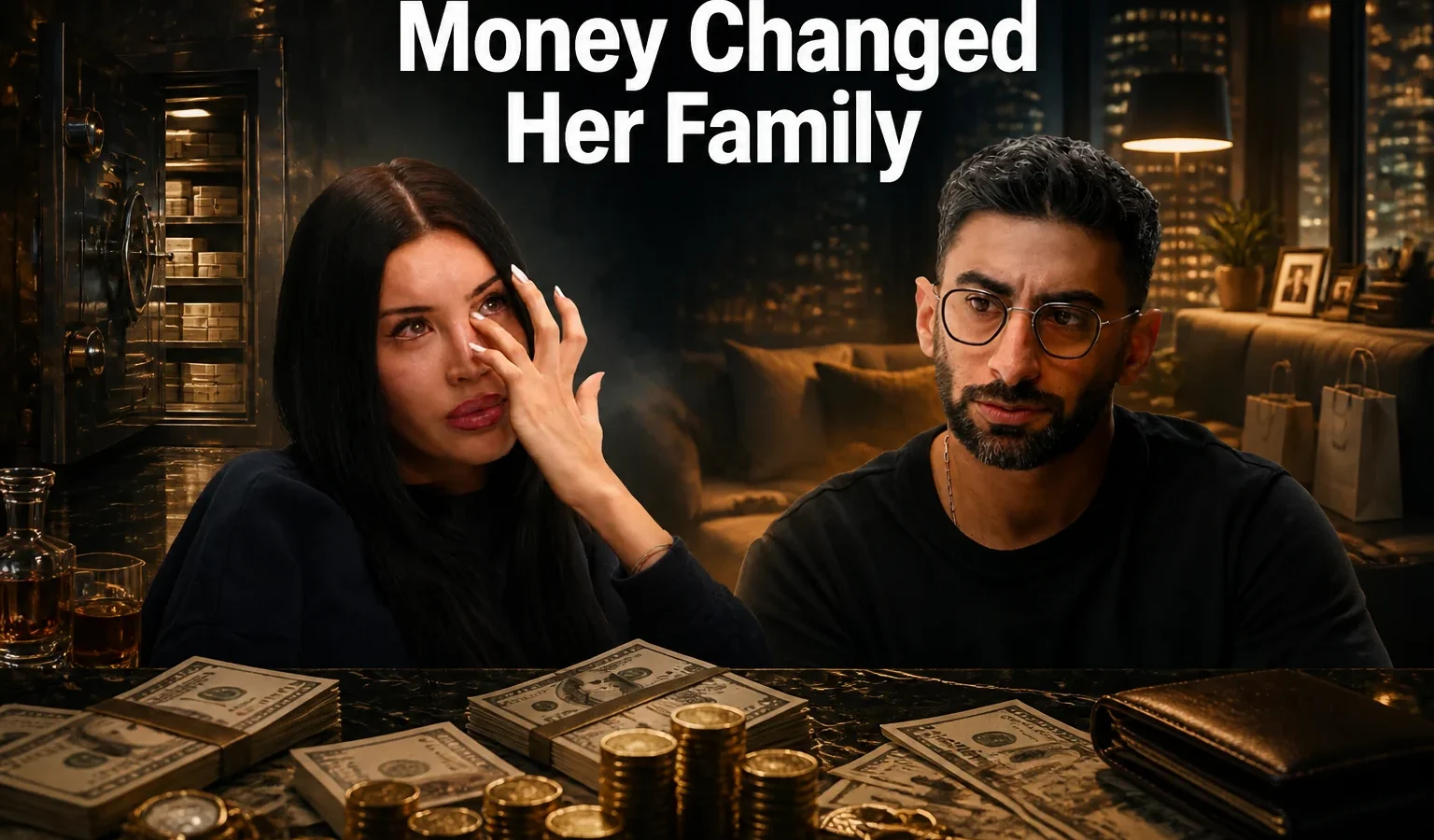
One payment changed the temperature of the whole house. For Liza Jubrailova, money changing her family’s life was never a slogan about luxury or status; it was about taking pressure off her mother’s chest and getting real fear out of the room.
She ties that belief to scenes that are hard to forget. Her mother once had to beg for $5 to buy bread (24:35), and those memories sit underneath everything she says about earning, saving, and wanting financial control.
She wanted money because poverty had already humiliated her family
Liza Jubrailova says money became an obsession because she had already seen what the lack of it did inside a family. She does not describe money as healing every wound. She describes it as a way to remove suffering that never needed to be there in the first place.
One of the clearest examples comes from her mother needing $5 for bread and having to beg for it. Another comes from a moment that pushed the same lesson even deeper into her. Her mother asked her to take $5 from her father’s wallet to buy bread, and she says she was beaten for it (44:28).
“I honestly wish it was a lie.”
— Liza Jubrailova (45:40)
She also describes her father spitting in her face because she spent $2.00 extra on something he had asked her to buy (44:43). Those details explain why money, in her telling, stopped being an abstract goal and became tied to safety, dignity, and the ability to act without asking permission from someone cruel.
That is also why she talks about money in practical terms. Not happiness. Not virtue. Relief. If you grew up watching every small purchase turn into fear, then income does not look like excess. It looks like an exit.
Why did money change her family’s life?
Money changed her family’s life because it gave her mother options she had never had before. Liza Jubrailova says the point was not that cash repaired every emotional loss. The point was that it solved problems that had been grinding her mother down for years.
She says she started social media partly to make money for exactly that reason, not simply to be seen. Work, for her, was tied to helping the person she had always wanted to protect. She says she had wanted to work from a young age, and by 15 turning 16 it became legal for her to work (20:14), which fits the same pattern: earning meant the possibility of helping, not just independence for its own sake.
The first major proof arrived with YouTube ad revenue.
“I immediately sent everything to my mom.”
— Liza Jubrailova (46:42)
From there, the pattern stayed the same. She says she later gave her mother a monthly allowance, which matters because a monthly allowance is not a dramatic gesture once. It is steady support. It means bills stop arriving like threats. It means groceries, housing, and daily life no longer depend on pleading with the wrong person.
Her account keeps circling back to one idea: money does not make a family whole, but it can stop a family from being trapped inside the same emergency every week.
Paying off the house was the clearest proof
Paying off her mother’s house is the sharpest example Liza Jubrailova gives of money changing her family’s life in a concrete way. She says a major brand deal gave her the means to clear that burden so her mother would not have to spend another 15 years working to pay off the house (46:54).
That is not symbolic help. That is time returned. Fifteen years is a huge slice of a person’s life, and she frames the payment that way: as removing a weight her mother should not have had to carry alone.
The meaning of the money sits inside that specific act. She is not arguing that wealth creates moral worth. She is saying money can buy back peace, rest, and choices for people who have lived without them. A paid-off house changes what mornings feel like. It changes what happens when an unexpected bill shows up. It changes whether your future is already spoken for.
Her family story also includes another hard turn: she says she was 19 years old when her father got another wife and left (1:07:31). That detail matters here because it shows why financial stability felt urgent rather than optional. If support can disappear, then earning becomes a form of protection against being abandoned with the cost.
In her account, the house was not about proving success. It was about making sure her mother could breathe.
Her line between money and meaning stays firm
Liza Jubrailova keeps a clear line between what money can do and what it cannot do. She says money solved many real problems and removed a lot of stress, but she does not present it as moral fulfillment or spiritual completion.
That distinction is why her argument does not sound naive. She is not saying a bank balance fixes betrayal, grief, or the damage left by a violent home. She is saying money can stop some forms of suffering from continuing, and that matters. Rent, food, debt, and housing pressure are not philosophical problems. They are material ones.
Later in the conversation, she puts the deeper tension in a different form.
“When does the creator submit to the creation?”
— Liza Jubrailova (1:21:28)
Placed beside everything she says about earning, that line shows the boundary she tries to keep. Money is a tool. A powerful one, in her story. It can protect, reduce fear, and create room to live. But it cannot become the master of your whole life without costing something back.
Still, on the question raised by her family story, her answer stays plain. She wanted money because she had seen exactly what having none did to her mother, and once she had it, she used it to remove the burdens she could actually remove.
Listen to the full episode
Listen to the full conversation on Spotify — the episode goes further than any article can, and following the show means you catch the next one.
 Watch this episode on YouTube ·
 Listen on Spotify · Subscribe to #ABtalks
Links from this episode
Mentioned in the episode. Some of these may be affiliate or sponsored links.