
Yo Yo Honey Singh · · 5 min read
What Role Did Yo Yo Honey Singh’s Parents Play in His Life and Career?
See how Honey Singh parents shaped his music, choices, values, and public life through his own words. Read the full story.
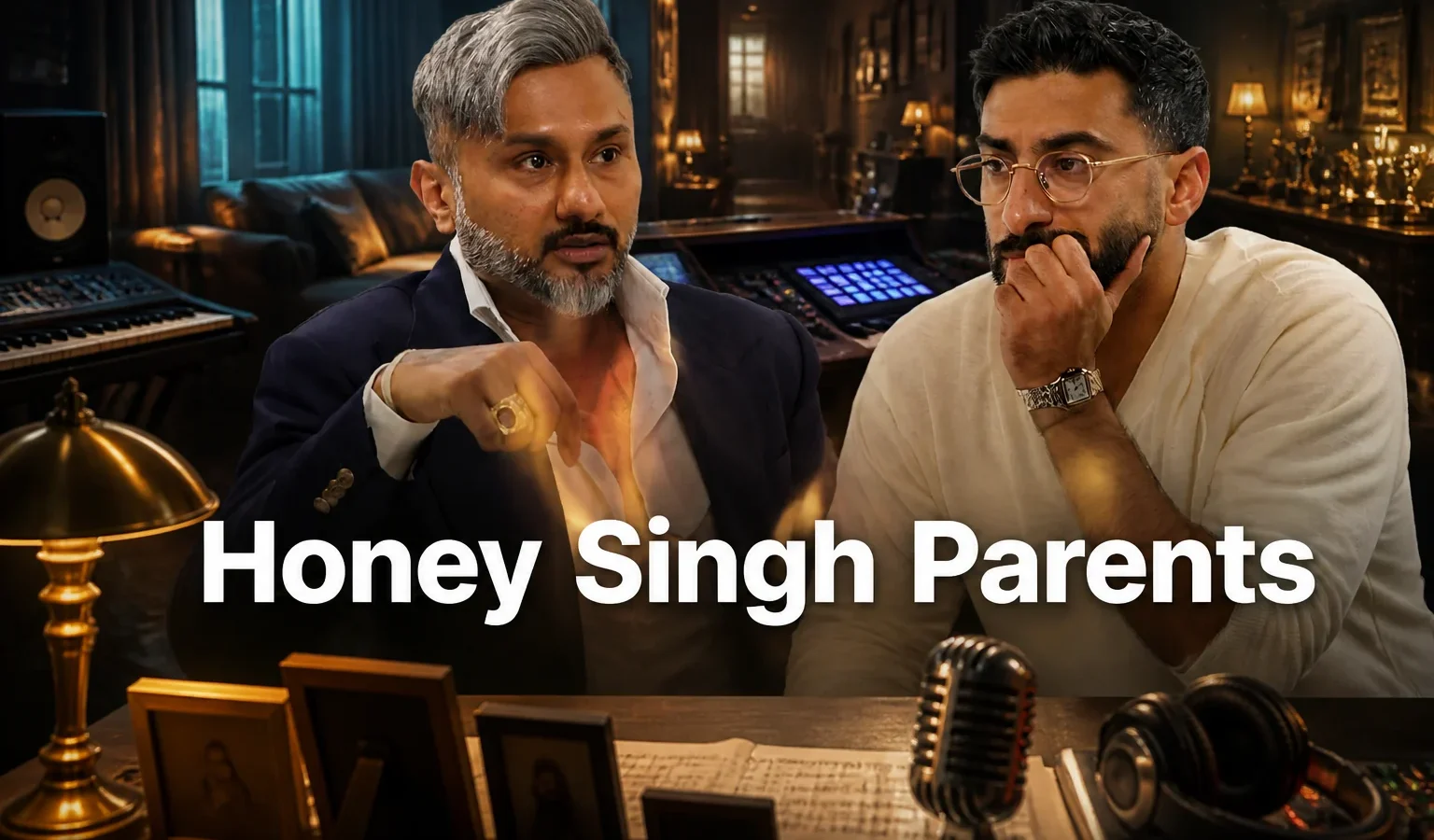
This article draws on our conversation with Yo Yo Honey Singh.
Yo Yo Honey Singh says his parents sit at the center of his life, not at the edges of it. In his account, they shape the way he makes music, the way he handles money, the way he speaks in public, and the way he measures what a good life even is.
He does not describe his mother and father as background support. He describes them as the people who steady his judgment, train his instincts, and keep his ambition tied to home rather than ego.
Why does Yo Yo Honey Singh call his father the biggest inspiration in his life?
Yo Yo Honey Singh says his father is the biggest inspiration in his life because he guides both his character and his work. He says he does not take any professional decision without asking him, which turns his father from a family elder into an active presence in every serious career move.
That role goes beyond advice in the loose sense. Singh says his father handles all his accounts and financial transactions, which shows a level of trust most artists would reserve for managers, lawyers, or business teams. He places that responsibility inside the family instead. For him, judgment on money is not separate from judgment on life.
The guidance he repeats is simple. His father tells him not to run after money or success, and to do the work that keeps him happy. That line matters because it connects career choices to peace of mind, not just to scale, fame, or earnings. In Singh’s telling, his father is the person who keeps ambition from becoming a trap.
He also gives his father unusual authority on music itself. He says his father built his musical ear early by making him listen to Mohammed Rafi from childhood and by insisting that nobody can beat Mohammed Rafi. Singh does not present that as a casual household preference. He presents it as training. He adds that, in his view, his father is one of the best music journalists and critics he has ever met, which means the same person who guards the money also sharpens the art.
Read together, those details answer a lot about how his career has been held together. His father is not one influence among many. He is the person Singh trusts with taste, discipline, and decisions.
What did his mother do in Yo Yo Honey Singh’s life beyond emotional support?
His mother, in his telling, is not only a source of comfort but a teacher and daily moral guide. He calls her an angel sent by God, his teacher, and his best friend, which places her inside his emotional life and his conduct at the same time.
“All the parents are good, bro.”
— Yo Yo Honey Singh (1:20:21)
That broad statement opens out into something specific when he talks about his own mother. He says she advised him before this international podcast not to swear because new audiences would be watching him (1:20:21). The detail is small on the surface, but it shows how her influence works. She is listening for how he will be received, how he should carry himself, and what kind of impression he should leave when the room gets bigger.
That means her role is practical, not symbolic. She is not presented as someone he thanks after the fact. She is part of the preparation. A career in public life depends on performance, but it also depends on restraint, timing, and knowing when a habit that works in one setting will hurt you in another. His mother, as he describes her, steps into that space naturally.
Calling her his teacher also gives the relationship a sharper shape. A teacher corrects you. A best friend hears you. An angel, in his language, protects you. He uses all three ideas together, and the combination explains why his mother comes through as one of the people he leans on for emotional survival, not just affection.
How do his parents shape the values behind the career?
His parents shape the values behind the career by giving him a clear idea of what success is for. Singh says he wants to give his mother and father everything, and he presents that urge as common among boys from his background.
That matters because it shifts the goal of achievement. The work is not framed as a race for status on its own. The work is tied to repayment, duty, pride, and care. If you want to understand why family sits so close to his professional life, that is the answer: the career is not only about self-expression or celebrity; it is also about what he can return to the two people who formed him.
His father appears as the anchor for judgment, money, and musical standards. His mother appears as the anchor for conduct, warmth, and emotional steadiness. Together, they function as the fixed points around which the rest of his life moves. In his account, that is why they are not side characters in the story of his rise. They are the structure holding it up.
Listen to the full episode
Listen to the full conversation on Spotify — the episode goes further than any article can, and following the show means you catch the next one.
 Watch this episode on YouTube ·
 Listen on Spotify · Subscribe to #ABtalks
Links from this episode
Mentioned in the episode. Some of these may be affiliate or sponsored links.