
The Wizard Liz · · 5 min read
Why The Wizard Liz Says Co-Parenting Turned Into a Trap
See why Liz says a co-parenting trap formed after betrayal, custody conflict, and blocked access to her son. Read her account now.
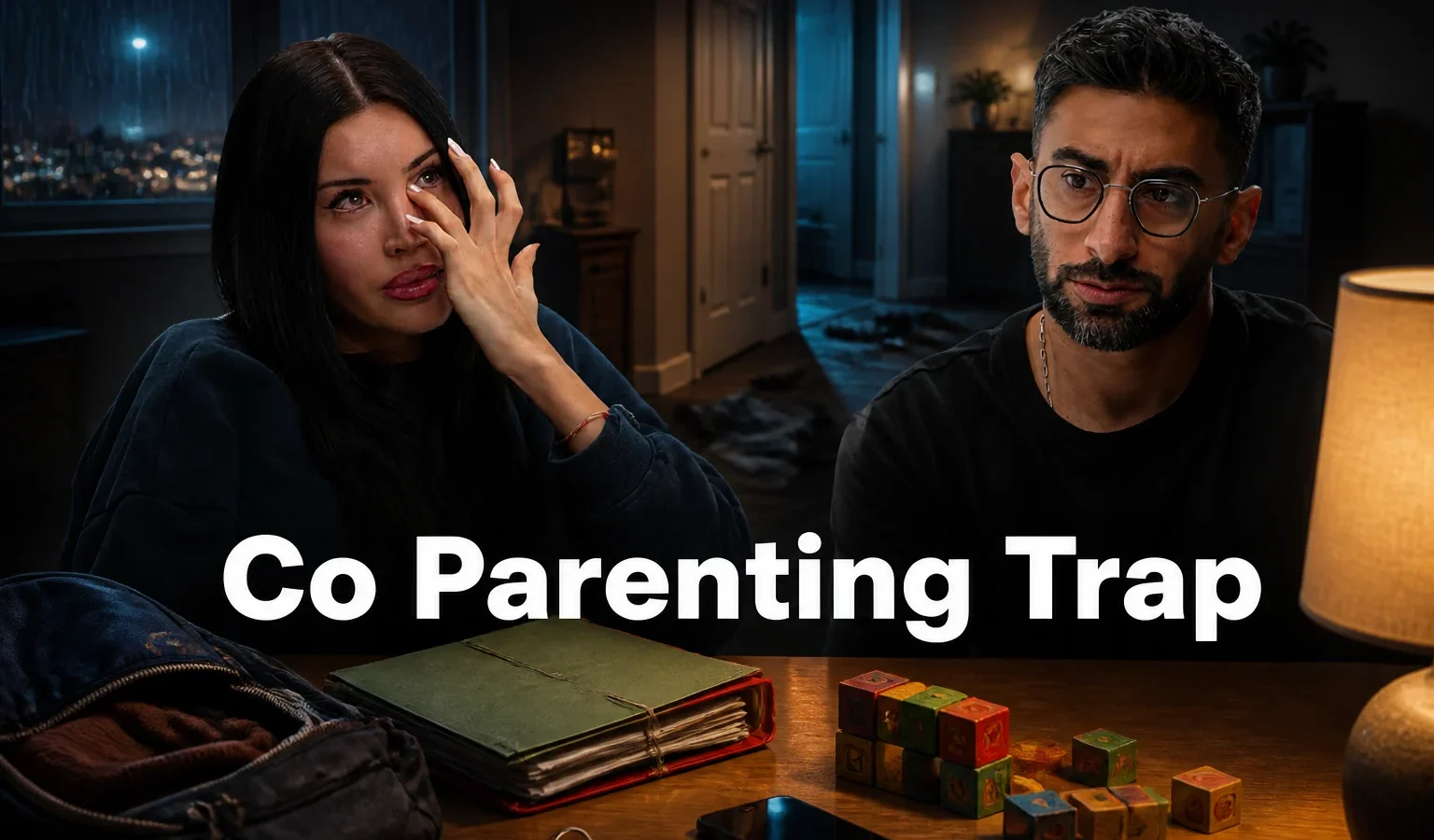
This article draws on our conversation with Liza Jubrailova.
Liz says the co-parenting trap started after the breakup, not before, because once a child was involved the cheating was over but the control was not. She describes trying to protect her son by keeping his father in his life, then finding herself in a situation where access to her child became the pressure point used against her.
Liza Jubrailova says she left the relationship because of cheating, yet during pregnancy she still chose to move to the United States so her child could have both parents nearby. She says the plan was simple: a 5050 custody split they hoped to do (2:02:41). What she describes next is the reason she calls the arrangement a trap rather than a shared parenting plan.
Why did Liz say shared parenting became a trap?
Liz says shared parenting became a trap because the promise was equal parenting, while the reality was dependence, financial strain, and threats tied to her immigration status. She describes abandoning herself for her child, paying for everything, and even having him live in her house while the relationship was already over.
In her account, the decision was made from one belief: her son needed a father. That belief is what took her to the United States after the breakup. She says she tried to do the decent thing and build a structure where both parents could stay present, but the structure left her exposed. Instead of a stable arrangement, she says she was threatened with ICE and deportation, which turned custody into something bigger than scheduling or logistics. It became fear.
She also ties the trap to distance and dependence. She describes the father being able to move more freely while she was the one whose right to stay could be challenged. That imbalance matters in her version of events because once one parent can threaten the other parent’s place in the country, the parenting arrangement stops being equal in any ordinary sense.
The same section of her story also explains why she kept going longer than she wanted to. The reason, as she tells it, was her child. She says she abandoned herself for him, and that is the phrase that carries the whole setup: the mother stays, pays, absorbs the pressure, and calls it sacrifice until the sacrifice starts looking like surrender.
What happened after she tried to leave the co-parenting trap?
Liz says leaving did not end the pressure because the fight moved from the home into visas, lawyers, and access to her son. She describes her sister flying from Belgium to the United States to get her out, telling her to pack and leave, and she says it was the first time she felt that someone had come to save her.
After she left, she says her visa was denied. In her telling, that changed everything fast. The father then kept the child from her, and she describes it as though having the baby also meant possessing her. The breakup had already happened, but she says the control stayed alive through custody and contact.
She gives painfully specific markers for that period. She says she spent $50,000 on lawyers (2:03:20). She says there was a point when she had no contact with her child for two weeks and knew nothing about him. Later, she says they reached an agreement that allowed FaceTime at least, which shows how reduced the fight had become: not over shared day-to-day parenting anymore, but over the minimum contact a mother could secure.
She also says the last time she saw her son was the 26th of April. And she says she was told she could see him in Canada for a week if she came there and proved she was a good mother. In her framing, that demand says everything. Access was no longer treated as a basic bond between mother and child. It had become conditional, supervised by the other parent’s judgment, and tied to a test she says she was expected to pass.
What does Liz say this kind of custody fight really reveals?
Liz says a child can become the new vehicle for fear and control after infidelity, especially when one parent already knows the other will do anything for that child. Her account is not about ordinary co-parenting conflict. She describes a situation where the child became the center of leverage.
“You’re too dear for me to hurt you behind your back.”
— Anas Bukhash (1:57:15)
That line fits the moral standard missing from the situation she describes: directness, honesty, and a refusal to use closeness as cover for harm. Her own story runs the other way. She says the betrayal did not stop with cheating. It changed form.
One detail sharpens that picture. She says the father had an 18 hour flight to Dubai from the United States to consider if he wanted to see his child there (1:59:30). The point in her account is not the travel time itself. It is that distance, effort, and access kept becoming part of a larger struggle over who gets to decide the terms of contact.
Jubrailova keeps the argument narrow. She is not talking about abstract custody theory. She is talking about what happens when a mother tries to preserve a father-child bond after a breakup and finds that the same relationship now operates through fear, legal costs, blocked access, and tests of worthiness. In her version, the lesson is plain: once control finds a child, the fight is no longer only between two adults.
Listen to the full episode
Listen to the full conversation on Spotify — the episode goes further than any article can, and following the show means you catch the next one.
 Watch this episode on YouTube ·
 Listen on Spotify · Subscribe to #ABtalks
Links from this episode
Mentioned in the episode. Some of these may be affiliate or sponsored links.