
Yo Yo Honey Singh · · 5 min read
What Did Yo Yo Honey Singh Say About Brown Rang and the Risk That Changed His Life?
Learn how Brown Rang became Yo Yo Honey Singh’s life-changing gamble after years of struggle. Read the full story now.
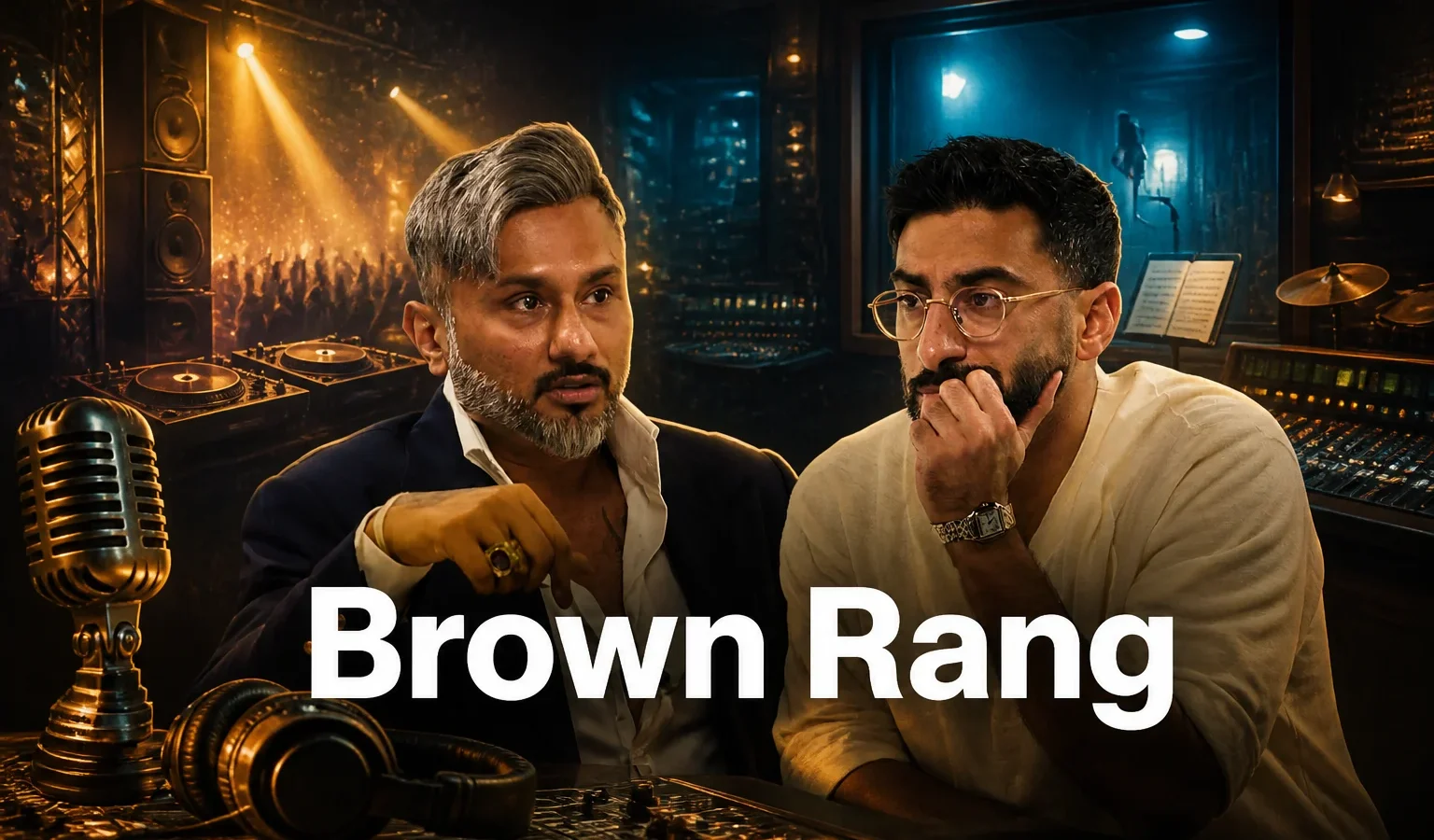
This article draws on our conversation with Yo Yo Honey Singh.
One song had already crossed borders, reached the BBC charts, and turned heads in India. Then the phone stopped ringing. Brown Rang sits in that gap, in Yo Yo Honey Singh’s telling, between an early breakthrough and a stretch where he says he was broke, frustrated, and getting no work.
He describes a career that did not rise in a straight line. Yo Yo Honey Singh says his first song became very big in India in 2005 and even reached the BBC charts, but the success did not turn into steady opportunities. Instead, he says he spent two years broke after that, with no work coming in, which is the part that makes the later decision on Brown Rang feel less like a flashy move and more like an all-in bet.
He says the risk behind Brown Rang came after success had already failed to pay off
Brown Rang matters in his account because he places it after disappointment, not before fame. Singh says he had already seen what looked like a breakthrough: his first song got big in India in 2005 and even entered the BBC charts. But he says none of that protected him from the next stretch, when work did not come and the industry did not back him.
That is why he frames the song as a gamble. He is not describing a comfortable artist investing from a position of security. He says he was broke for two years after that first early success, which turns Brown Rang into a response to being stuck rather than a routine next release (2:26).
The story he tells is simple and harsh. Early attention did not create a stable career. Recognition did not mean support. A song reaching listeners in India and the BBC charts still left him in a position where he had to decide whether to wait for somebody else to bet on him or do it himself.
In his version of events, he chose the second path. That choice is the center of the Brown Rang story: not a lucky accident, and not a smooth ladder upward, but a point where frustration and self-belief met money on the table.
The Brown Rang gamble was a Dubai shoot funded from his own savings
The Brown Rang gamble, as Singh describes it, was specific, expensive, and personal. He says he spent about $60,000 on the video in Dubai, using savings of near about $100,000, while knowing the move carried serious risk.
Those details matter because they show what he thought was at stake. This was not a label-backed experiment in his telling. It was money he had saved, and a large share of it went into one song and one visual. He says plainly that it was a gamble, which gives you the scale of his confidence and the scale of the danger at the same time.
Dubai also matters in the way he presents the move. He does not talk about Brown Rang as only an audio release. He ties the song to the video, to image, to presentation, and to the choice to make something that looked big when his circumstances did not feel secure. The bet was on the full package.
And in his account, it worked. Singh says Brown Rang changed his life. That sentence carries the whole turn: from a period with no industry support and no work to a release that reset his career. He does not present that shift as other people finally discovering him by chance. He presents it as the result of backing his own sound when he felt nobody else was going to do it for him.
Why Brown Rang fits his bigger view of himself as a producer first
Brown Rang fits the larger picture Singh gives of himself because he still describes himself first as a music maker and producer, even after the fame that followed. The song is not separate from that identity. In his telling, it is one of the clearest examples of what happens when he trusts his own ear enough to stake his future on it.
That changes how you read the risk. The money matters, and the career turn matters, but the deeper point in his account is authorship. He was not waiting around for somebody else to define the next move. He backed his own sound, built the visual around it, and treated the song as something worth risking real savings on.
There is ambition in that, but also a refusal to be passive. He says the industry support was not there. Brown Rang becomes the answer to that absence. If no one was going to open the door, he would build the track, fund the video, and force the moment himself.
That is why this story stays bigger than one hit. In Singh’s version, Brown Rang is the point where frustration turned into action, savings turned into a wager, and a producer’s self-belief turned into the song that changed his life.
Listen to the full episode
Listen to the full conversation on Spotify — the episode goes further than any article can, and following the show means you catch the next one.
 Watch this episode on YouTube ·
 Listen on Spotify · Subscribe to #ABtalks
Links from this episode
Mentioned in the episode. Some of these may be affiliate or sponsored links.